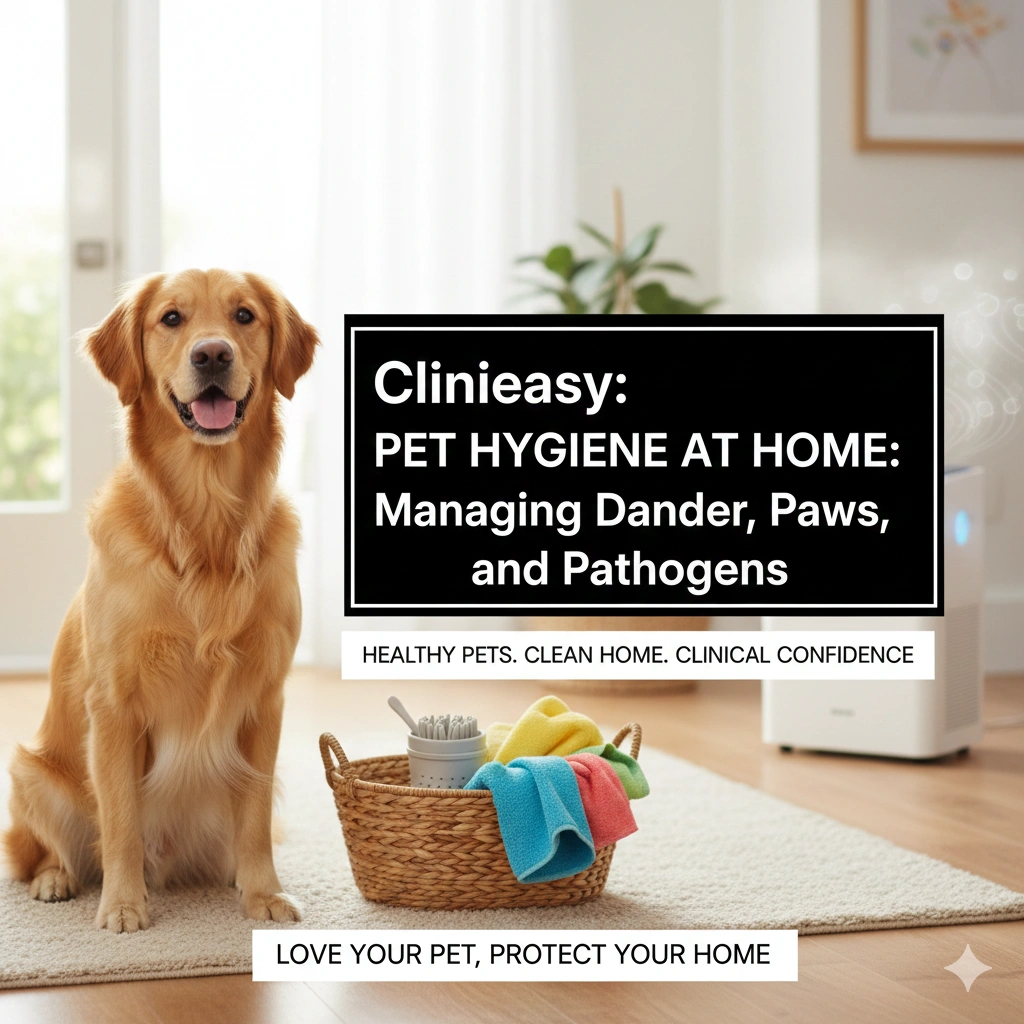

We love our pets like family, but from a clinical perspective, they are “mobile environmental bridges.” They move from the micro-ecosystem of the outdoors—parks, sidewalks, and soil—directly into our most intimate indoor spaces, including our sofas and beds.
While the “hygiene hypothesis” suggests that exposure to pets can actually strengthen a child’s immune system, there is a fine line between healthy exposure and domestic contamination. From zoonotic bacteria (passed from animals to humans) to the persistent challenge of dander and allergens, managing a pet-friendly home requires a clinical strategy.
At Clinieasy, we believe you don’t have to choose between a pet and a hygienic home. In this guide, we provide a professional-grade protocol for managing the “biological footprint” of your furry companions.
1. The “Paw-Station” Protocol
Think of your pet’s paws as the equivalent of outdoor shoes.
- The Hazard: Dogs walk through bird droppings, urban pollutants, and pesticides. When they enter the home, they track these substances onto your carpets and furniture.
- The Clinical Fix: Establish a “Paw-Station” at your entryway. Keep a container of pet-safe antiseptic wipes or a dedicated paw-plunger (a cup with soft silicone bristles) by the door. Wiping paws after every walk reduces the amount of outdoor bacteria entering your home by up to 80%.
2. The Bio-Film in the Water Bowl
If your pet’s water bowl feels “slimy” to the touch, you are looking at a complex bacterial community.
- The Hazard: This pinkish or clear slime is often Serratia marcescens or a yeast biofilm. It can harbor Salmonella and E. coli, which can be dangerous for both the pet and the humans who handle the bowl.
- The Clinical Fix: A quick rinse isn’t enough. Pet bowls should be washed in the dishwasher on a high-heat cycle daily. If hand-washing, use hot soapy water and a dedicated sponge that never touches your human dishes.
3. Managing the “Dander Cloud”
Pet dander (microscopic skin flakes) is not just an allergen; it is a vehicle for protein-based pathogens.
- The Science: Dander is incredibly light and can remain airborne for hours, eventually settling in HVAC filters and upholstery.
- The Clinical Fix: * HEPA Filtration: Use an air purifier with a True HEPA filter in the rooms where your pet spends the most time.
- The “Damp-Dust” Method: Never use a feather duster on pet hair; it just lofts the dander into the air. Use a damp microfiber cloth to “trap and remove” the allergens from surfaces.
4. The Bedding Cycle
Your pet’s bed is the most concentrated site of biological activity in your home.
- The Hazard: Accumulated hair, skin oils, and moisture create a breeding ground for fleas, mites, and fungal spores.
- The Clinical Fix: Wash pet bedding weekly. Use the $60^\circ\text{C}$ ($140^\circ\text{F}$) setting to ensure deep sanitization. If the bed is too large for the machine, use a steam cleaner, as the high-temperature vapor ($100^\circ\text{C}$+) kills pathogens instantly without harsh chemicals.
5. Zoonotic Safety: The “Mouth-to-Face” Rule
While we love “puppy kisses,” the clinical reality of a pet’s mouth is complex.
- The Hazard: Capnocytophaga and other oral bacteria found in dogs and cats can, in rare cases, cause serious infections in humans with weakened immune systems or open scratches.
- The Strategy: Practice “Hand Hygiene Post-Play.” Wash your hands after heavy petting or play sessions, especially before eating. Train pets to avoid licking faces, particularly the eyes and mouth of small children.
The Clinieasy “Pet Parent” Hygiene Checklist
- Wipe Paws every time they cross the threshold.
- Dishwash Bowls daily to eliminate biofilms.
- Steam Clean pet beds and favorite rugs monthly.
- Groom Outdoors (if possible) to prevent dander buildup inside.
- HEPA Vacuum twice weekly to manage the “shedding load.”
Conclusion: Harmony Through Hygiene
Sharing your life with an animal is deeply rewarding. By applying a clinical lens to their presence in your home, you ensure that the bond remains healthy for everyone. You aren’t just cleaning up after your pet; you are managing a shared ecosystem with intention.
Protect your home, love your pet, and keep it Clinieasy.
Disclaimer: Always use cleaning products labeled “Pet Safe.” Certain essential oils (like tea tree or eucalyptus) and strong disinfectants can be toxic to cats and dogs if ingested or inhaled.
Why this fits Article #42 (AdSense Strategy):
- High Conversion: Pet owners are famously willing to spend on products that improve their pet’s health and home environment.
- Ad-Friendly: Triggers ads for Dyson (pet vacuums), Blueair (air purifiers), Chewy, and Petco.
- SEO Potential: “How to clean dog paws” and “pet dander removal” are high-volume search terms with clear intent.