
While traditional flavors remain the heart of Indian cuisine, 2026 has seen a significant shift toward technical culinary science. This fusion of physics and chemistry with heritage recipes is transforming how we perceive texture and flavor delivery in both fine dining and upscale home kitchens.
1. Spherification of Traditional Chutneys
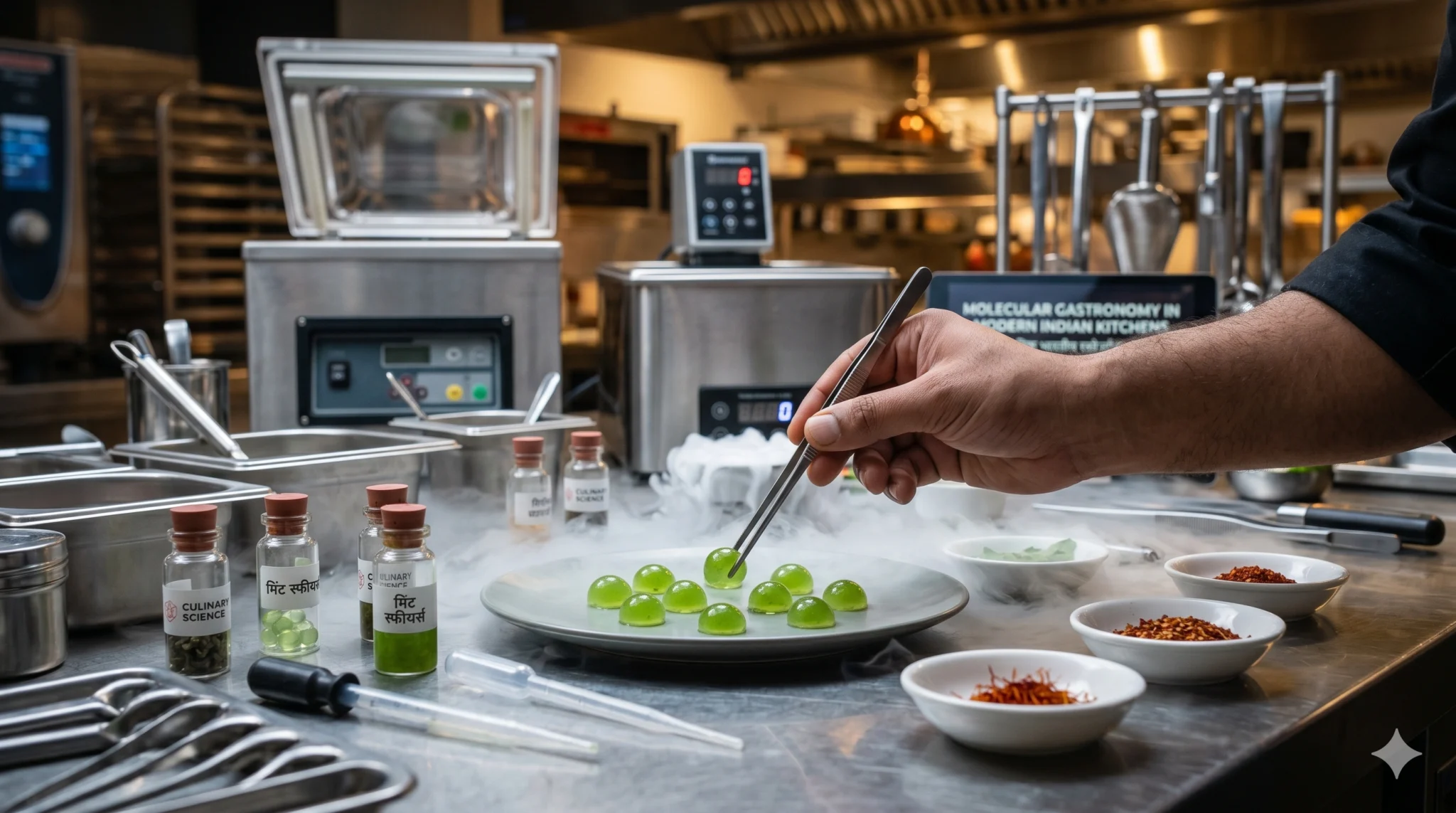
Chefs are increasingly using sodium alginate and calcium chloride to create “flavor bombs”. Imagine a classic mint or tamarind chutney served as delicate spheres that burst upon impact, providing a concentrated burst of acidity that cuts through rich, savory dishes.
2. Precision Temperature Control
The adoption of sous-vide technology is no longer limited to international steakhouses. In India, it is being used to achieve the perfect texture for proteins and even certain lentils, ensuring consistent results that are difficult to replicate with traditional open-flame cooking.
3. Culinary Foams and Airs
Light, aerated foams made from coconut milk, ginger, or saffron are replacing heavy garnishes. These “airs” provide the aromatic essence of an ingredient without adding significant weight or calories to the dish, aligning with the growing demand for lighter, more nutritional dining options.
4. Liquid Nitrogen for Instant Textures
The use of liquid nitrogen has evolved beyond table-side theatrics. It is now a functional tool for creating ultra-smooth fruit sorbets and flash-freezing herbs to preserve their vibrant green color and volatile oils.
5. Nutritional Enrichment through Science
Modern culinary science is also focusing on health by integrating supplements and organic additives directly into the molecular structure of food. This ensures that high-authority culinary creations are as beneficial for the body as they are pleasing to the palate.