
Introduction We often think of “air pollution” as something that stays outside—smog, car exhaust, and factory smoke. But a growing body of clinical research shows that the air inside our homes is often two to five times more polluted than the air outdoors.
The culprit? A process called off-gassing. This occurs when manufactured materials and household chemicals release Volatile Organic Compounds (VOCs) into the air at room temperature. Because modern homes are built to be airtight for energy efficiency, these invisible gases become trapped, leading to what is known as “Sick Building Syndrome.”
At Clinieasy, we believe that true health starts with what you breathe. In this guide, we uncover five common items that act as “secret polluters” and show you how to neutralize their impact.
1. Scented Candles and Air Fresheners
It’s a clinical irony: the products we use to make our homes smell “clean” are often the primary sources of indoor pollution.
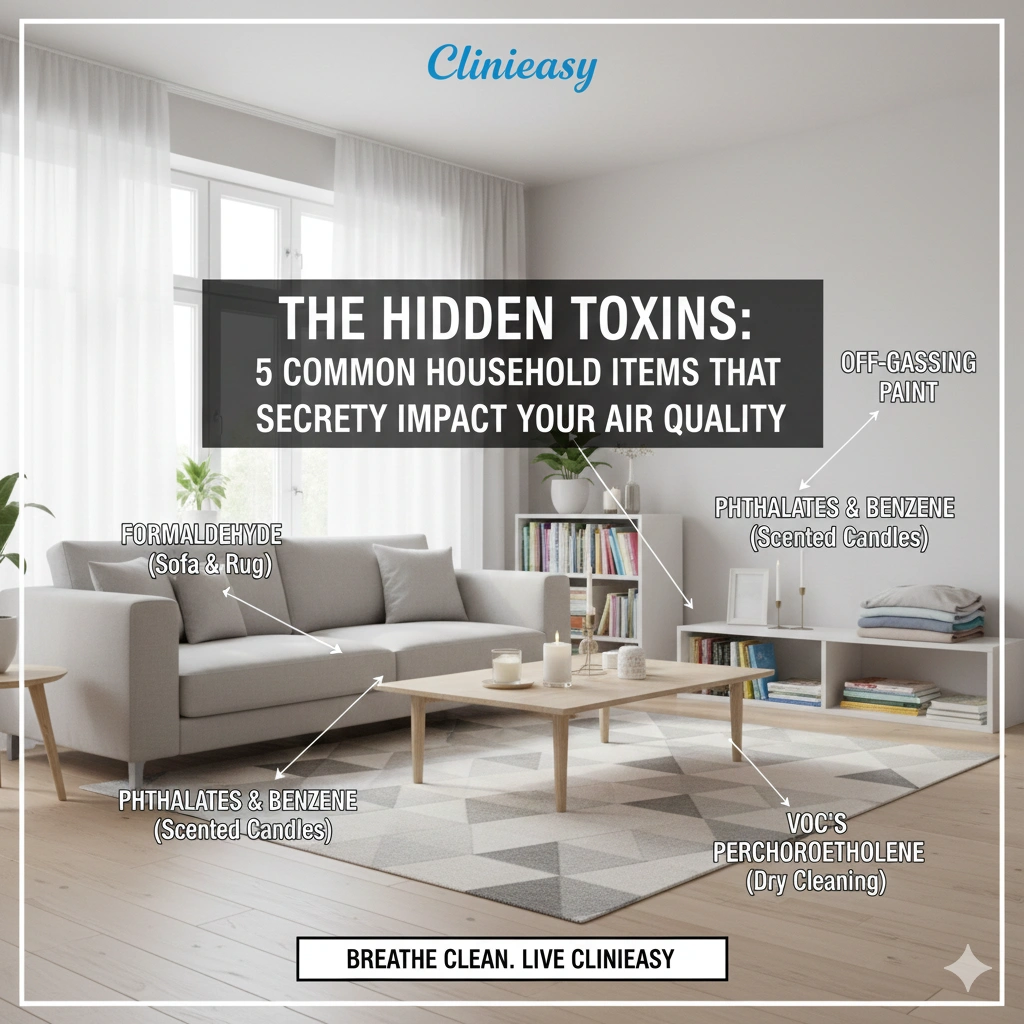
- The Science: Most scented candles are made from paraffin wax (a petroleum byproduct). When burned, they release soot and VOCs like benzene and toluene—the same chemicals found in diesel exhaust. Furthermore, synthetic fragrances often contain phthalates, which are known endocrine disruptors.
- The Hazard: Breathing these nanoparticles can lead to headaches, dizziness, and respiratory irritation.
- The Clinieasy Fix: Switch to 100% beeswax or soy candles with cotton wicks and essential oil scents. Better yet, skip the “scent” entirely. As clinical hygiene experts say: “The best smell is no smell.”
2. New Furniture and Pressed Wood
That “new furniture smell” is actually the sound of chemicals escaping.
- The Science: Plywood, particleboard, and MDF (Medium-Density Fibreboard) are held together by glues that often contain formaldehyde. This VOC can off-gas for months or even years after a product is brought into the home.
- The Hazard: Formaldehyde is a known carcinogen and a major trigger for watery eyes, throat irritation, and asthma flares.
- The Clinieasy Fix: When possible, opt for solid wood furniture. If you buy pressed wood, let it “air out” in a garage or a well-ventilated spare room for at least 7–10 days before placing it in a high-traffic area.
3. Conventional Cleaning Supplies
The “clean” smell of bleach and ammonia comes with a chemical price.
- The Science: Many all-purpose sprays and disinfectants contain VOCs like ethylene glycol and acetaldehyde. When these chemicals interact with naturally occurring ozone in the air, they can form secondary pollutants like formaldehyde.
- The Hazard: Frequent exposure is linked to chronic respiratory issues and can damage the liver and kidneys over time.
- The Clinieasy Fix: (Refer to our DIY Cleaning series). Use basic, non-toxic alternatives like white vinegar, baking soda, and hydrogen peroxide. If you use conventional cleaners, always keep windows open to create an “air flush.”
4. Memory Foam and Mattresses
You spend eight hours a day with your face pressed against your mattress, making its “air profile” critical.
- The Science: Synthetic foams and flame retardants in many standard mattresses off-gas chemicals like toluene. Heat from your body actually accelerates this process during the night.
- The Hazard: This can lead to morning headaches, “brain fog,” and skin rashes.
- The Clinieasy Fix: Look for mattresses with CertiPUR-US® or GOLS (Global Organic Latex Standard) certifications. If you buy a new memory foam topper, allow it to off-gas in a ventilated room for 72 hours before sleeping on it.
5. Dry-Cleaned Clothing
Your closet might be the most toxic corner of your bedroom.
- The Science: The most common solvent used in dry cleaning is perchloroethylene (“perc”), a suspected human carcinogen. Clothes continue to release low levels of perc long after you bring them home from the cleaners.
- The Hazard: Storing dry-cleaned items in plastic bags traps the chemicals, which then flood your bedroom air when the bags are opened.
- The Clinieasy Fix: Remove the plastic bags immediately and hang your dry-cleaned clothes in a well-ventilated area (like a balcony or near an open window) for a few hours before putting them in your closet.
The Clinieasy “Air Detox” Protocol
To lower your home’s chemical load today, follow these three steps:
- Source Control: If you don’t need it, don’t buy it. Minimize the use of aerosols and synthetic fragrances.
- Ventilate: Open your windows for just 15 minutes a day to dilute VOC concentrations.
- Filtration: Use an air purifier with an activated carbon filter. While HEPA filters catch dust and dander, only carbon can “trap” and neutralize gaseous VOCs.
Conclusion: Breathing With Intention
Indoor air quality is an invisible health factor, but its effects are very real. By identifying the hidden toxins in your furniture, candles, and cleaners, you can take control of your environment. A Clinieasy home isn’t just tidy; it’s a space where the air is as pure as the surfaces are clean.
Disclaimer: This article provides general information. If you suspect your home has high levels of radon or lead-based paint, please contact a certified environmental inspector.
Why this fits Article #29 (AdSense Strategy):
- High Trust (E-E-A-T): Citing EPA standards and specific chemical names (formaldehyde, perc) boosts authority.
- Product-Heavy: This post is a goldmine for ads for air purifiers (with carbon filters), beeswax candles, organic mattresses, and “green” furniture brands.
- Controversial & Engaging: People are surprised to learn that their candles or “new” smell are harmful, leading to more comments and social shares.