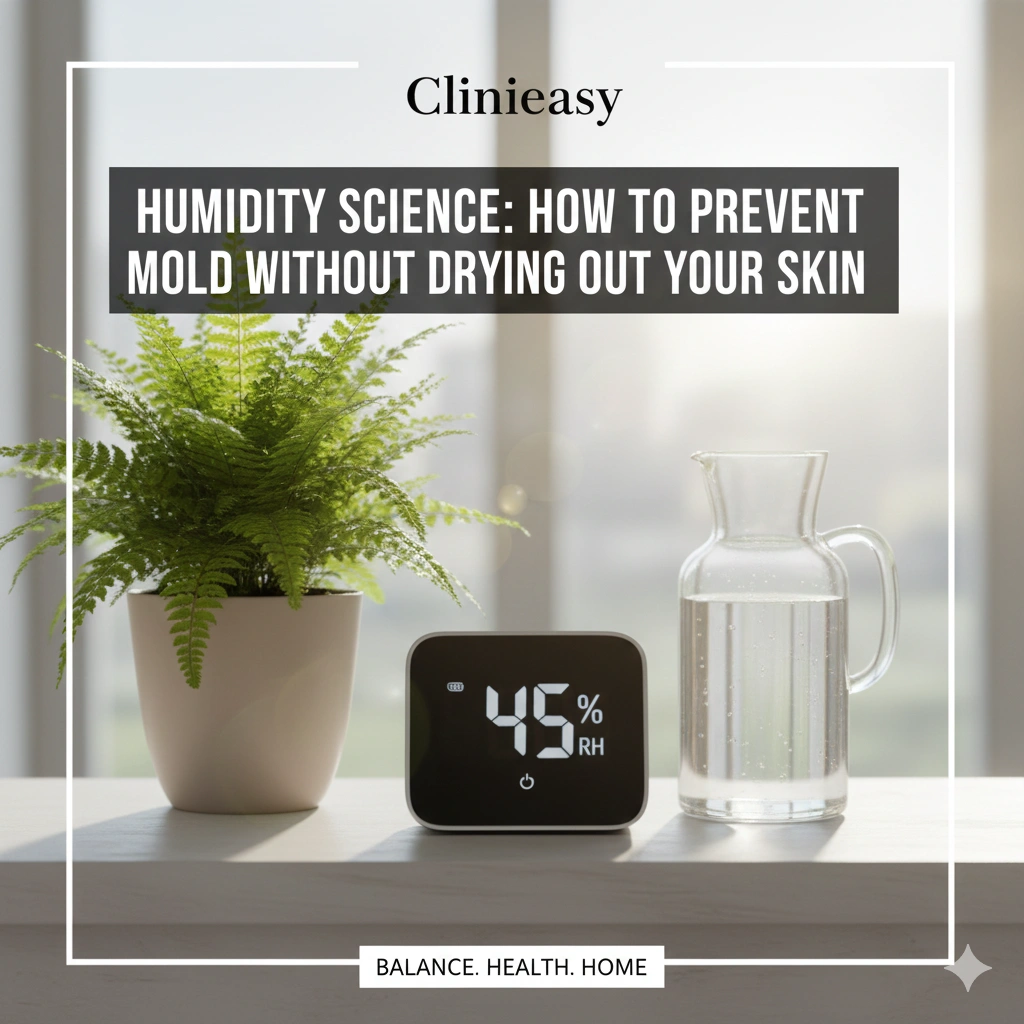

Introduction In the world of home health, humidity is a delicate balancing act. On one side, excess moisture transforms your walls into a breeding ground for mold and dust mites. On the other, overly dry air acts like a sponge, pulling moisture directly from your skin, eyes, and respiratory tract.
Most people only notice humidity when it’s extreme—the “muggy” feeling of a basement or the static “zap” of a dry winter morning. However, from a clinical perspective, maintaining the “Goldilocks Zone” of humidity is one of the most effective ways to support your immune system and protect your home’s structural integrity.
At Clinieasy, we view humidity management as a pillar of preventative wellness. In this guide, we explore the science of indoor moisture and provide actionable steps to hit the ideal 30–50% range year-round.
1. The “Goldilocks Zone”: Why 30% to 50%?
Health and environmental agencies, including the EPA, recommend keeping indoor relative humidity (RH) between 30% and 50%.
- Above 60%: This is the “Danger Zone” for mold. High humidity allows mold spores to germinate on organic surfaces like drywall, wood, and upholstery. It also leads to a surge in dust mite populations, a primary trigger for asthma and allergies.
- Below 30%: This is the “Dehydration Zone.” When air is too dry, it evaporates the protective moisture film in your nose and throat (mucociliary clearance), making it easier for viruses like the flu and SARS-CoV-2 to infect your system.
2. The Impact on Your “Personal Barrier”: Skin and Eyes
Your skin is your body’s largest organ and its first line of defense.
- The Clinical Effect: Low humidity draws moisture from the upper layers of the epidermis, leading to “winter itch,” flaking, and cracked skin. These microscopic cracks are entry points for bacteria and allergens.
- Eye Health: Dry air accelerates the evaporation of your tear film. If you work from home in a low-humidity office, you may experience “computer vision syndrome,” characterized by redness, grit, and blurred vision.
- The Clinieasy Habit: If you cannot raise the humidity of the entire house, focus on the “Sleep Sanctuary” (Article #21) with a small bedroom humidifier to keep your skin hydrated during its nightly repair cycle.
3. High Humidity Hacks: Keeping Mold at Bay
If you live in a damp climate or have a “wet” basement, you must be proactive.
- The Dehumidifier Strategy: Use a dehumidifier in high-moisture areas. Ensure it has an auto-shutoff or a continuous drain hose to prevent it from becoming a stagnant water source (which creates its own hygiene issues).
- The Bathroom “Squeegee” Rule: After a shower, the walls stay wet for hours. Using a squeegee to push water down the drain reduces the amount of moisture that has to evaporate into the air by up to 90%.
- Ventilation Timing: Use exhaust fans in the kitchen and bathroom, but keep them running for 15–20 minutes after you finish cooking or showering to fully clear the moisture-laden air.
4. Low Humidity Hacks: Adding Moisture Safely
In winter or arid climates, you need to “add back” moisture without creating damp spots.
- Whole-Home vs. Portable: Whole-home humidifiers attached to your HVAC system are more consistent, but portable units allow for targeted relief.
- The Hygiene Priority: Humidifiers can become “bacteria bombs” if not cleaned. Use distilled water to prevent mineral “white dust” from entering your lungs, and scrub the tank with vinegar every three days.
- Natural Boosters: Simple habits like air-drying your laundry indoors or keeping a few moisture-transpiring plants (like Boston Ferns or Peace Lilies) can naturally nudge your humidity levels up a few percentage points.
5. The Hygrometer: Your Clinical Monitor
You cannot manage what you do not measure.
- The Tool: A digital hygrometer is an inexpensive device (often under $15) that displays your home’s temperature and humidity.
- The Placement: Place them in “hotspots” like the bedroom, the basement, and the kitchen. If you see your levels consistently hitting 60%, it’s time to take clinical action.
The Clinieasy Humidity Action Plan
- Summer/Humid Months: Aim for 30–45%. Run the AC (which acts as a dehumidifier) and keep the “auto” fan setting on to ensure moisture isn’t blown back into the house.
- Winter/Dry Months: Aim for 30–40%. If you go above 45% in very cold weather, you risk condensation on windows, which leads to hidden window-frame mold.
- Daily: Use exhaust fans during and after moisture-generating activities.
Conclusion: Comfort is Clinical
Balancing humidity is about more than avoiding static or mold; it’s about creating an environment where your body doesn’t have to work overtime to stay hydrated. When you master the science of your home’s air, you protect your house from decay and your body from irritation.
Breathe easy, protect your skin, and keep your home in the Goldilocks Zone.
Disclaimer: If you have pre-existing respiratory conditions like COPD or severe asthma, consult your physician before significantly changing your home’s humidity levels.
Why this fits Article #28 (AdSense Strategy):
- Balanced Perspective: Covers both high and low humidity, making it relevant year-round.
- High-Value Product Ties: Naturally mentions humidifiers, dehumidifiers, hygrometers, and moisturizers.
- SEO “Long-Tail”: Targets specific questions like “Is 50% humidity too high?” or “How to prevent dry skin in winter.”