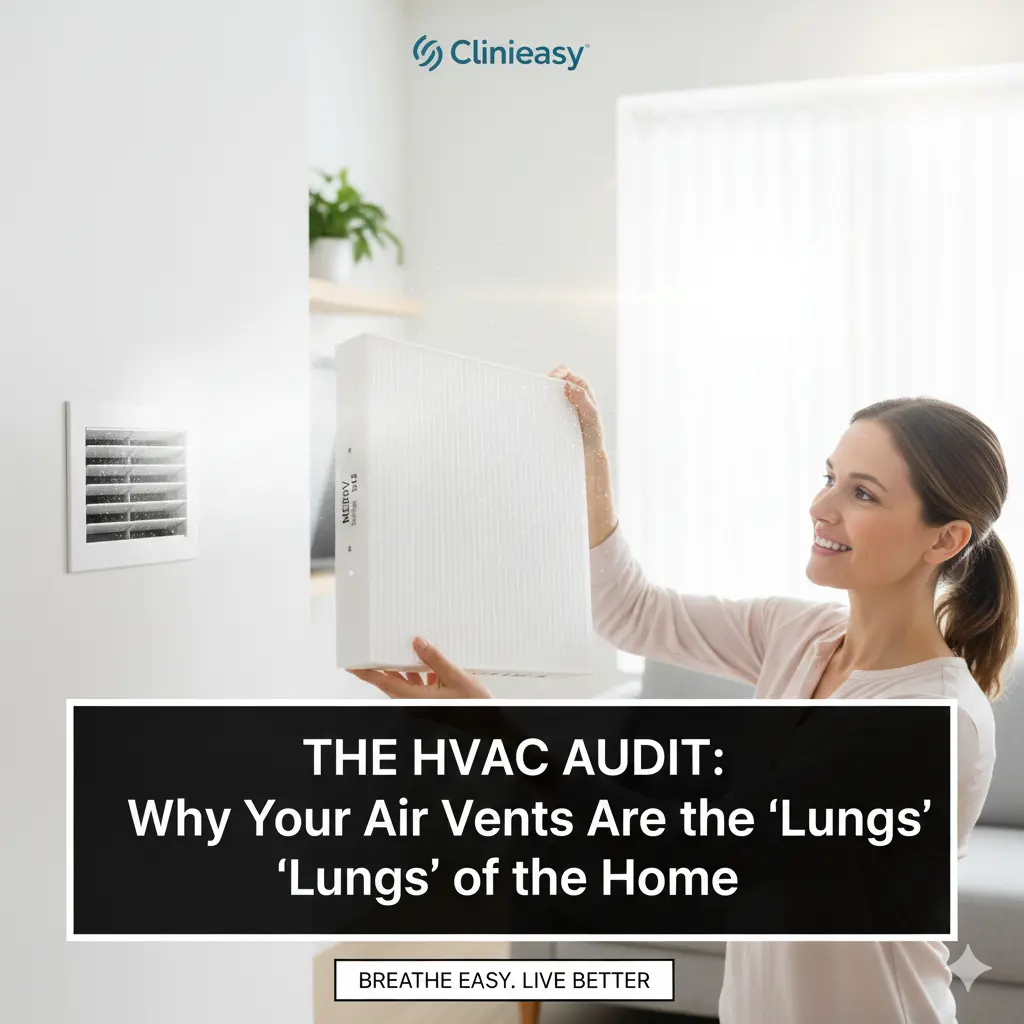

Introduction Think of your home as a living organism. If the rooms are the body, the HVAC (Heating, Ventilation, and Air Conditioning) system is the respiratory system. It breathes in the air from every room, conditions it, and exhales it back out.
However, if the “lungs” of your home are dirty, every breath you take is filtered through layers of dust, pet dander, mold spores, and pollen. From a clinical perspective, indoor air quality can be two to five times more polluted than outdoor air. Maintaining your HVAC system isn’t just about home maintenance—it is a fundamental act of preventative health.
At Clinieasy, we believe that clean surfaces start with clean air. In this guide, we break down the clinical standards for auditing your air quality and maintaining your HVAC system for maximum hygiene.
1. The Filter: Your First Line of Defense
The air filter is designed to protect both the machine and your lungs. Most homeowners use the cheapest filter available and leave it in for far too long.
- The MERV Rating: Filters are rated by MERV (Minimum Efficiency Reporting Value). For a “clinical” home standard, aim for a MERV 11 to 13 filter. These are dense enough to trap microscopic particles like bacteria and smoke without straining your system’s motor.
- The Replacement Schedule: Don’t wait for the change of seasons. Check your filter every 30 to 60 days. If you have pets or live in a high-pollen area, you will likely need to change it monthly.
2. The “Vent Reveal”: What’s Hiding Behind the Grille?
Take a screwdriver and remove one of your return air vent covers (the large ones that suck air in).
- The Hazard: It is common to find a thick “carpet” of gray dust. This is a mixture of skin cells, hair, and dust mites. Every time the fan kicks on, small particles of this debris are pulled into the system and redistributed.
- The Clinical Fix: Vacuum the reachable interior of the vents using a hose attachment with a HEPA filter. Wash the metal grilles in warm, soapy water to remove the “sticky” film of kitchen grease and dust that accumulates on them.
3. Humidity and the Coil: The Mold Factor
Inside your HVAC unit is an evaporator coil that gets very cold. As warm air passes over it, moisture condenses.
- The Hazard: If the drainage system is clogged or the coil is dirty, this moisture creates a dark, damp “petri dish” for mold growth.
- The Warning Signs: If you notice a “musty” or “locker room” smell when the AC first turns on, you likely have biological growth within the system.
- The Clinieasy Habit: Schedule a professional coil cleaning once a year. A clean coil improves air quality and can lower your energy bill by up to 15%.
4. Registry Hygiene: Preventing “Ghosting”
Have you ever noticed dark streaks on the ceiling or walls near your air vents? This is called “ghosting.”
- The Science: It occurs when soot, skin oils, or fine dust are electrostatically charged and stick to the surfaces around the vent.
- The Fix: Clean the area around your vents monthly. If you see significant soot, it may be a sign that your furnace is not burning fuel cleanly, which is a safety priority that requires an immediate technician visit.
5. The “Fresh Air” Intake
Modern homes are built to be airtight for energy efficiency, but this traps pollutants inside.
- The Strategy: If your HVAC system has a fresh air intake, ensure the outdoor screen is clear of leaves and spiderwebs. On days when the outdoor air quality index (AQI) is good, use your system’s “Fan” setting to circulate air while keeping a few windows cracked to achieve a “whole-house air exchange.”
Monthly: Inspect the air filter; replace if gray/dusty.
- Seasonally: Vacuum all floor and wall registers.
- Annually: Professional inspection of the heat exchanger and cooling coils.
- Always: Keep the area around your outdoor unit (the compressor) clear of weeds and debris to allow it to “breathe” efficiently.
Conclusion: Breathe Easy, Live Better
You can survive for weeks without food and days without water, but you only last minutes without air. By auditing your HVAC system and treating it with clinical rigor, you are ensuring that the very atmosphere of your home supports your vitality rather than draining it.
Clean air is the invisible foundation of a Clinieasy home.
Disclaimer: If you suspect a carbon monoxide leak or see black mold inside your ductwork, contact a licensed professional immediately.
Why this fits Article #27 (AdSense Strategy):
- High-Value Ads: This content is prime real estate for HVAC contractors, air filter subscription services, and air purifier brands.
- Technical Authority: Using terms like “MERV rating” and “Evaporator coil” establishes the site as an expert resource.
- Evergreen Demand: Air quality is a year-round concern, with peaks during allergy season and winter.